
Library: Resources & Media
Press Releases
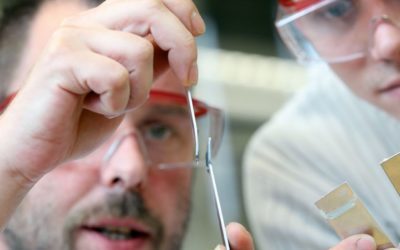
New Format for Fraunhofer IFAM European Adhesive Specialist (EAS) Course
The ChemQuest Group has announced an evolution of the popular Fraunhofer IFAM European Adhesive Specialist (EAS) course. ChemQuest is the exclusive cooperation partner of Fraunhofer IFAM for EAS and European Adhesive Bonder (EAB) courses in North America. New for 2023, the EAS course will blend online and in-person learning to provide participants with a combined virtual and hands-on opportunity.

Montaha Hidefi Joins ChemQuest as Color Consultant
The ChemQuest has appointed Montaha Hidefi as color consultant. Hidefi’s comprehensive background includes expertise in international marketing, powder coatings, and color analysis and forecasting with companies such as Rohm and Haas Co. (now Dow), Merck Group, and TIGER Drylac. She founded Color Landing Studio in 2018 and established the concept of Color Archeology™ in 2020.
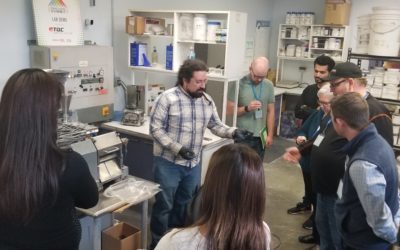
Registration Opens for Powder Coating Formulation Courses
January 10, 2023, Cincinnati, OH — The ChemQuest Group, a global consulting firm focused on tailored business strategy and optimization, technology acceleration, market intelligence, and M&A advisory services for the specialty materials industry, is pleased to...
Market Reports
U.S. Market Analysis for the Paint & Coatings Industry (2023 – 2028)
Global Market Analysis for the Paint & Coatings Industry (2024 – 2029)
Articles

Driving Innovation: The Role of Powder Coatings in Electric Vehicles
Over the past few years, the development and application of powder coatings for electric vehicles (EVs) has increased significantly. These coatings are now integral to critical EV components such as battery packs, electric motors, and busbars, all of which directly impact vehicle performance and efficiency.

Coatings for the Electrification Revolution
The global electrical steel coatings market was valued at $304 million in 2023 and is projected to grow at a 5.3% CAGR to $490.3 million from 2024 to 2032. Growth will be driven by an increasing need for energy-efficient transformers and electric motors as industries strive to reduce energy losses and meet various environmental regulations.
WEBINAR: Understanding and Preventing Powder Coating Defects
This webinar is designed for professionals who want to understand the science behind coating defects and improve their ability to prevent future coating failures. Presenters Eric Casebolt and Nathan Biller detail the technical causes behind some of the most common defects encountered in powder coating applications. You’ll learn about the complex interplay between raw materials, application techniques, and curing processes that can lead to defects, as well as root causes and insights on how to diagnose and correct these issues at their source. Special thanks to the Powder Coating Institute for making us part of its Webinar Wednesday series.

ChemQuest Q&A: Eric Casebolt
With interests ranging from new technology development to marketing strategy, Eric Casebolt spent much of his career with large, multinational raw materials suppliers. Always learning and evolving, he enjoys digging into clients’ problem areas and helping to develop innovative solutions. Eric joined ChemQuest in 2023 and currently serves as a vice president working on ChemQuest’s business development team. I spoke with him recently about his career, why he was drawn to ChemQuest, and how his accumulated knowledge and experience help support his work with our clients today.

Electric Avenue: The Changing Landscape of Mobility
The coatings industry has been serving the transportation industry since the introduction of the Ford Model-T. Many traditional coatings used today can be used on electric vehicles, but EVs represent a major engineering pivot from mechanically driven to chemically driven vehicles.
ASTM Testing for Cool Roof, Wall, and Pavement Applications
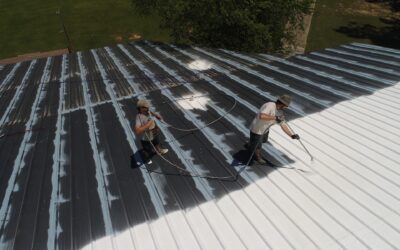
There are two basic types of cool-roof coatings: elastomeric and cementitious. The properties of elastomeric coatings are governed primarily by D6083/D6083M-24 Standard Specification for Liquid-Applied Acrylic Coating Used in Roofing. This specification defines the viscosity, volume, and weight solids required for cool coatings. It also establishes the minimum efficacy standards derived from successful in-service performance throughout the United States.
Videos


Podcast
Webinars