
Powder coatings are often regarded as the finish of choice for their durability, efficiency, and environmental benefits. In addition to these highly desirable attributes, powders can offer distinctive aesthetics created by inherently unique special effects. These special effects can be integrated into a powder coating at various stages during the manufacturing process.
Most powder coating formulas include additives and clever chemistry that impart a specified appearance like color, gloss, matte finish, or texture. These formulation techniques are incorporated into the original formulation prior to extrusion.
A second option is to blend an additive or pigment (metallic or pearlescent) into an already compounded dry powder to create an aesthetic enhancement. One of the more unique finishes relies upon a third technique that infuses materials into a fully formed surface of a cured powder coating.
Formulation Techniques
Microbial preservation has become increasingly challenging as traditional preservatives face regulatory restrictions and declining market acceptance. Chitosan provides inherent antimicrobial, antifungal, and antiviral functionality via electrostatic binding to negatively charged microbial membranes, leading to membrane disruption and inhibition of replication.
(Source: The ChemQuest Group, Inc.)
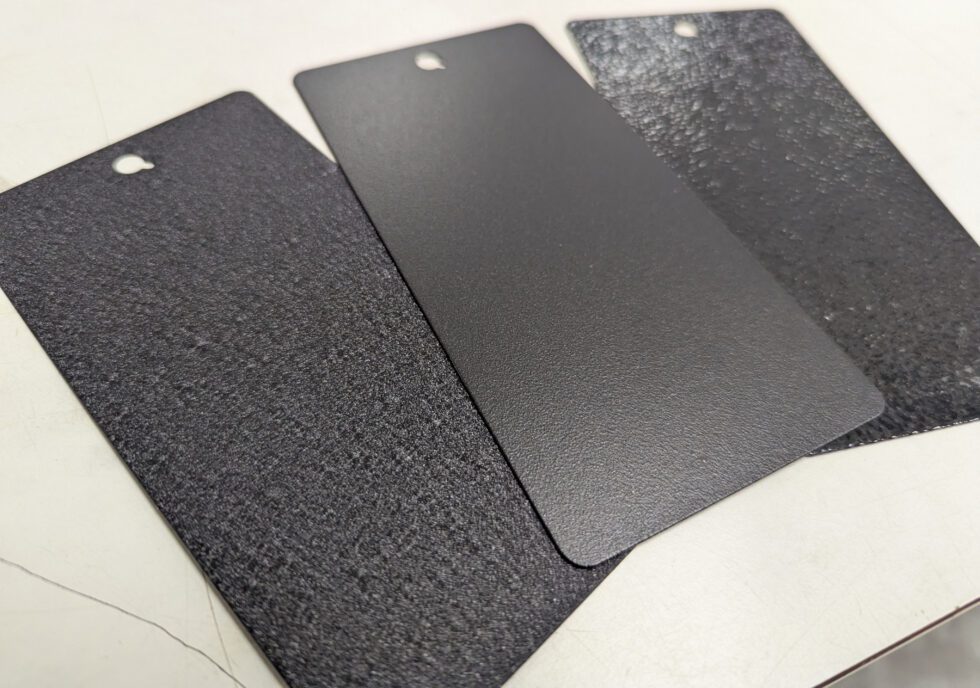
Wrinkle finishes are commonly achieved by pairing specific curing agent/catalyst combinations into epoxy or hydroxyl-functional polyester formulations. Still other additives can impart a controlled amount of incompatibility to produce a vein or hammertone texture.
Post-Blend Additives
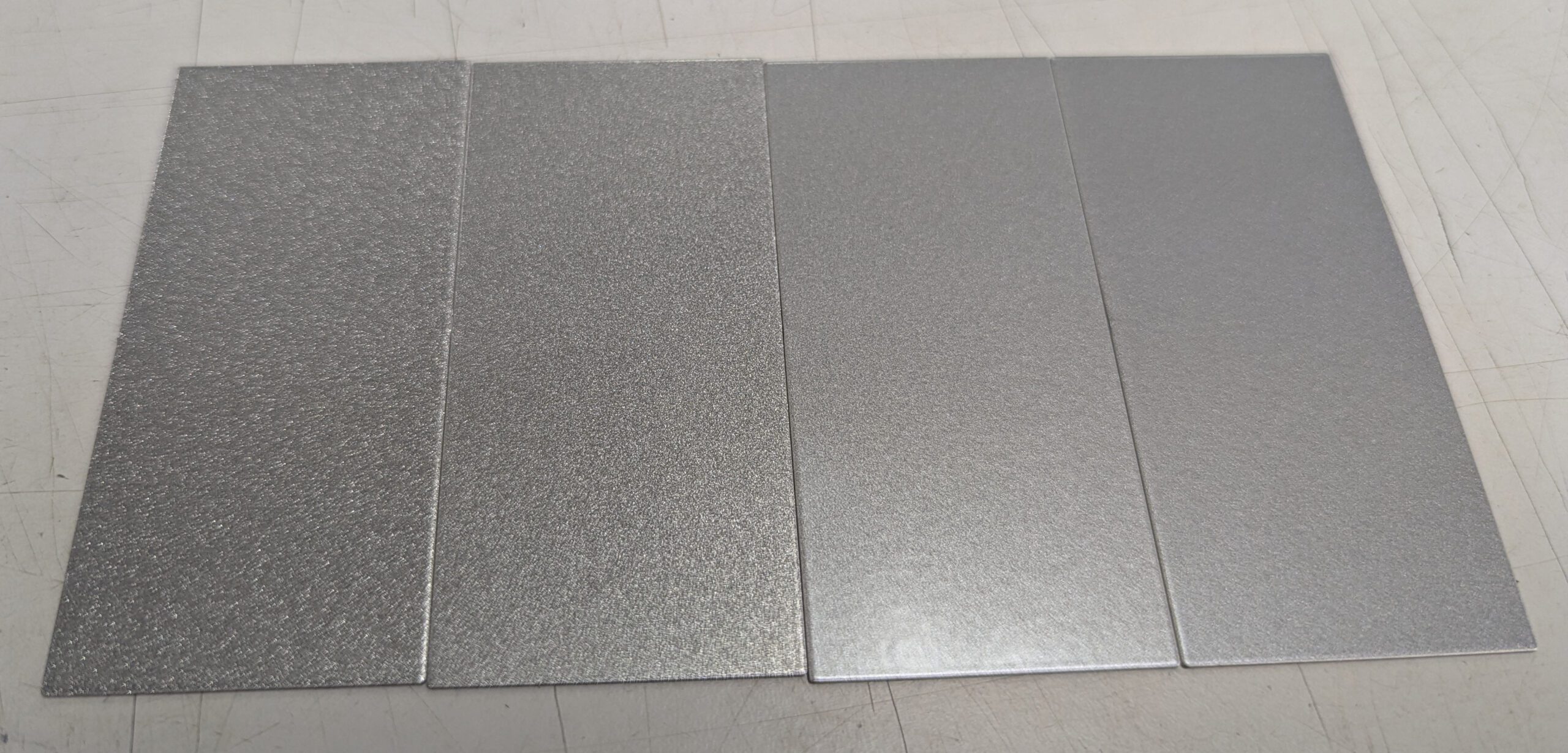
The most common post-extrusion technique used to create special effects is the addition of special-effect pigments to already processed powders. These include aluminum flakes and pearlescent micas, which otherwise would lose their sparkle if incorporated during the extrusion process. Specialty metallic flakes and micas are blended with the finished powder coating either through low-intensity mixing or by a process known as bonding. During bonding, flake pigments are introduced to powder particles that have been softened using the heat from an innovative mixing process.
(Source: The ChemQuest Group, Inc.)
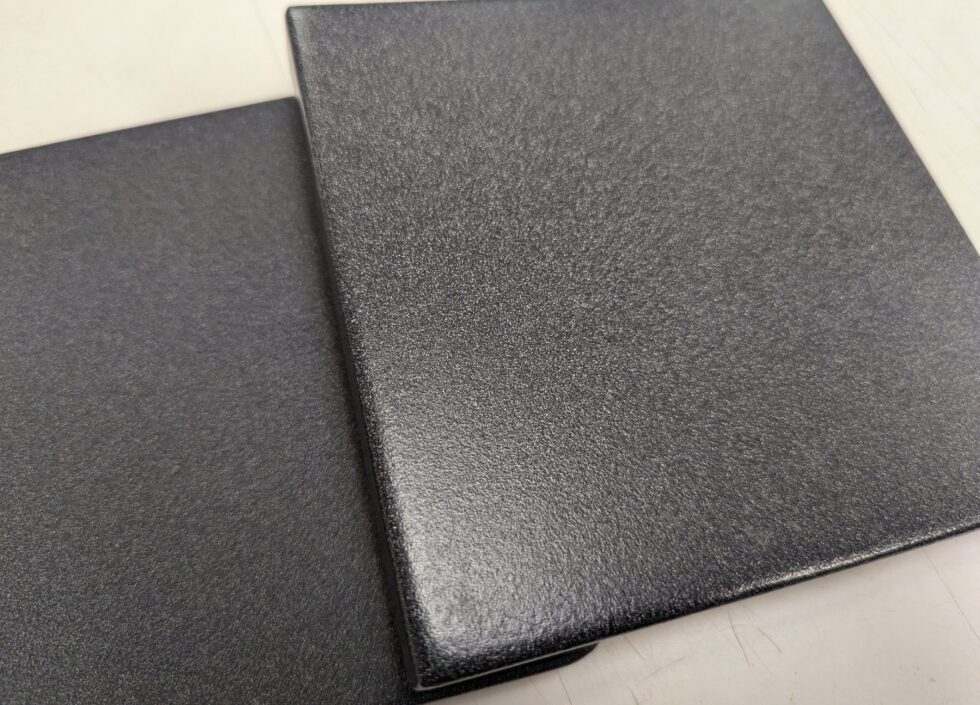
Speckle finishes can also be developed by blending dry powders. Achieving such an appearance requires blending two or more differently colored powders. During the melt and cure phase, this blend of discrete powder particles produces a consistent varicolored appearance.
(Source: The ChemQuest Group, Inc.)
Imprinted Textures and Dye Sublimation
Another type of special-effect powder coating involves creating a unique surface profile after the powder has been applied and fused to the substrate. Processes have been developed that use textured plates or rollers to imprint a pattern into the surface (e.g., a carbon fiber effect).
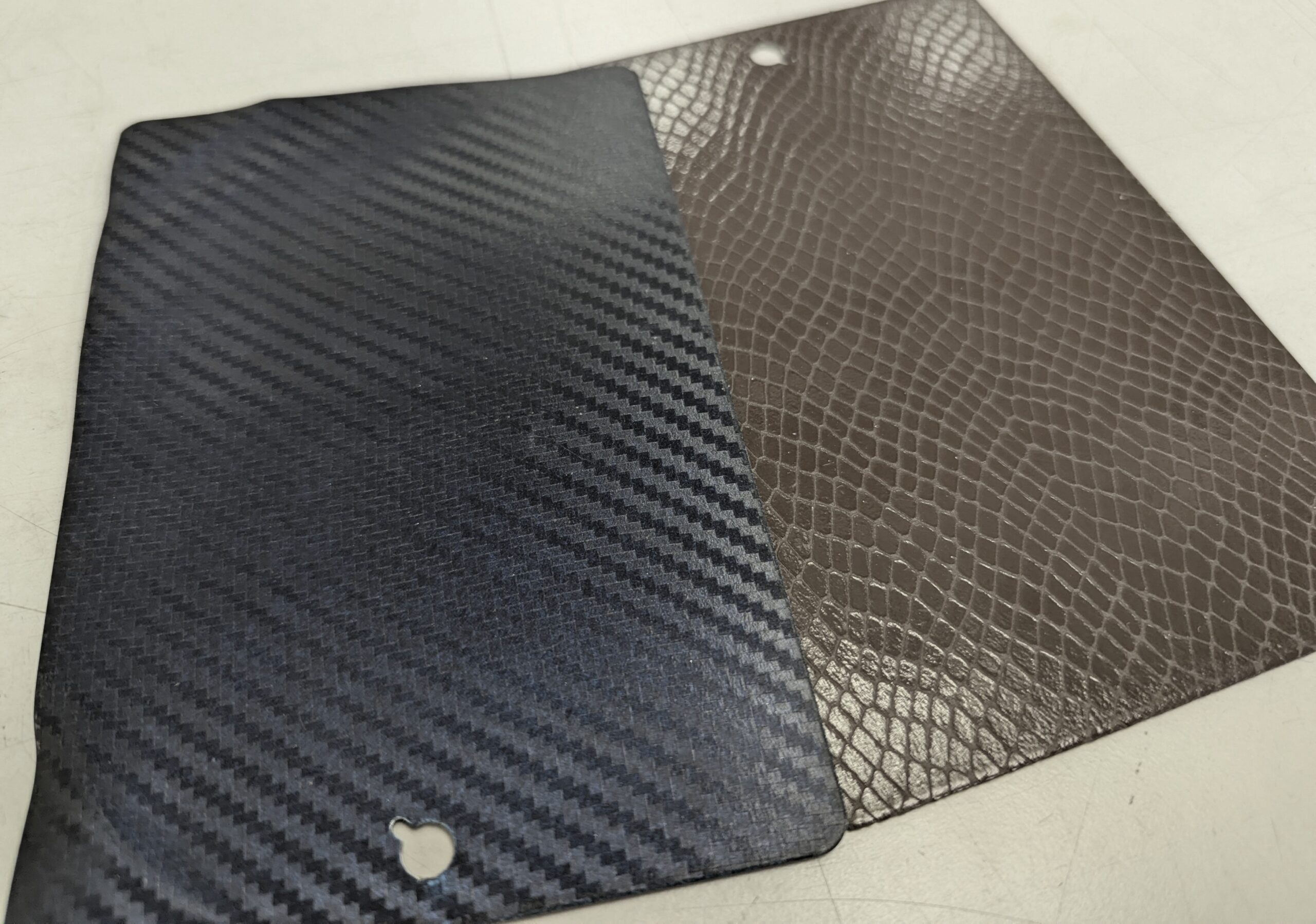
(Source: The ChemQuest Group, Inc.)
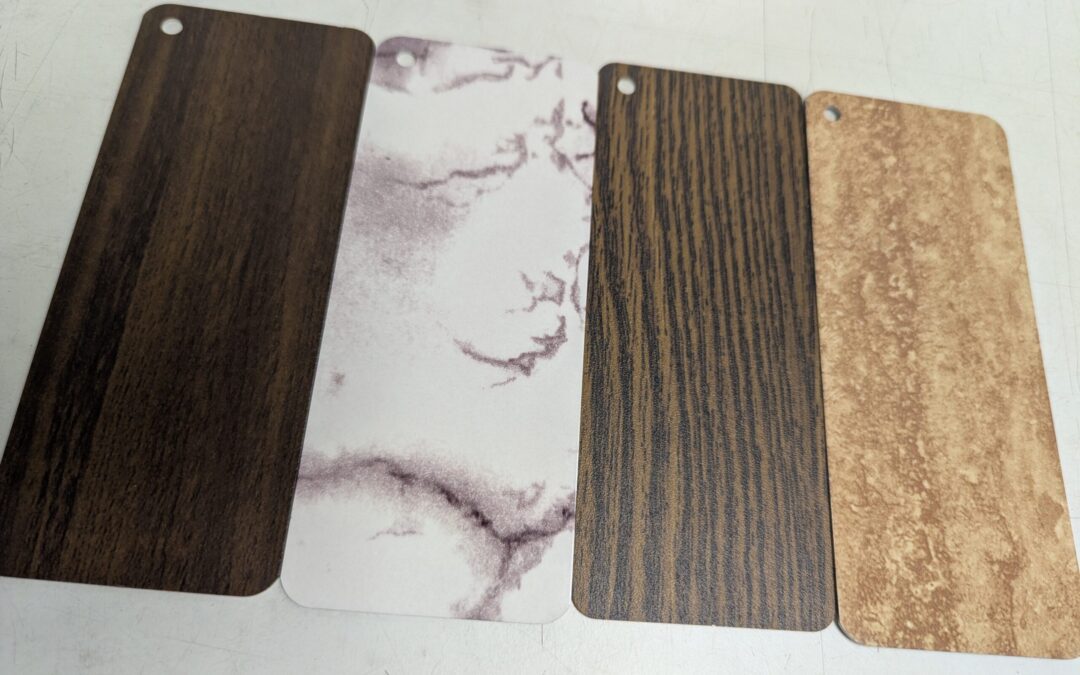
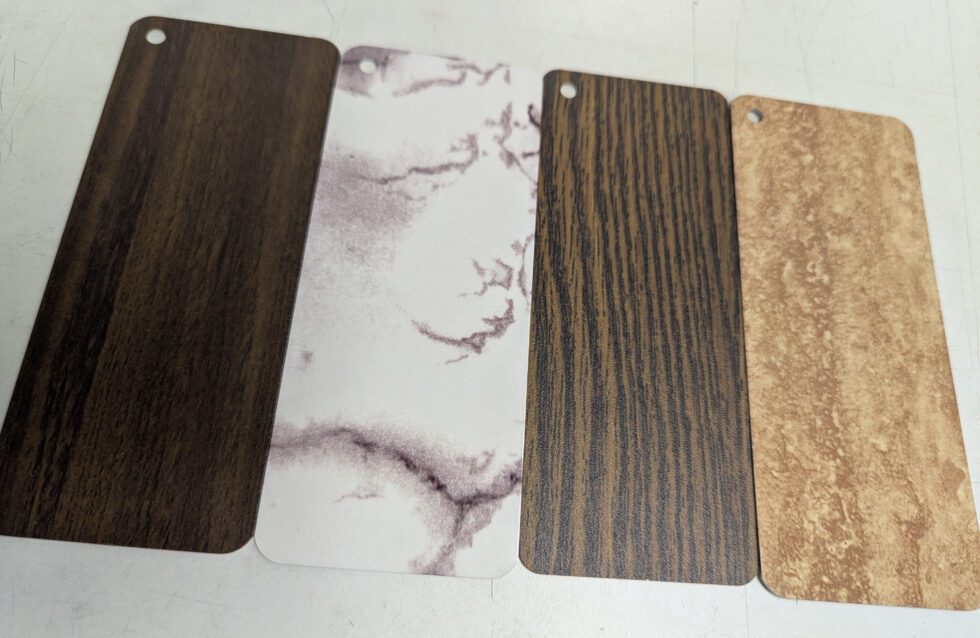
Another post-application visual effect can be created using dye sublimation. With this process, a specially formulated coating is applied and fused to a substrate, and then a printed ink pattern is transferred into the film. These coatings typically have a higher-than-average level of crosslink density to resist errant dye diffusion and hence poor image resolution.
(Source: The ChemQuest Group, Inc.)
Formulas are typically based on either epoxy chemistry (for interior applications) or polyester/urethane technology (for exterior durable end uses). They may be formulated with a lower total colorant pigment content than normal so that the ink is not obscured. Exterior grades also may include a UV absorber package to protect the inks, which may have less resistance to UV exposure than the coating formulation.
The process of dye sublimation requires that the initial coating is fully cured. Next, a heat-transfer film with the desired print pattern is wrapped onto the object and vacuum sealed to ensure intimate contact with the surface. Heat and pressure are applied in an oven, and the specially formulated ink sublimates into the coating to leave a decorative pattern.
The most common types of patterns are wood grain, stone, or marble appearances that can allow a metal fabrication to approximate the appearance of natural materials. The design can be anything from a camouflage pattern to a corporate or team logo, or whatever the designer’s imagination can think of.
Producing Expressive Surfaces
Powder coatings are not limited to smooth, monotone surfaces. A wide variety of appearances can be achieved either by raw material selection, post-manufacturing additions, embossing patterns, or embedding inks post-cure. With the right chemistry and processes, these functional and eco-friendly coatings can produce exciting and expressive surfaces without sacrificing the high performance that powder is known for.
To learn more, reach out to the author at nbiller@chemquest.com.
Read in ipcm.