Table of Contents
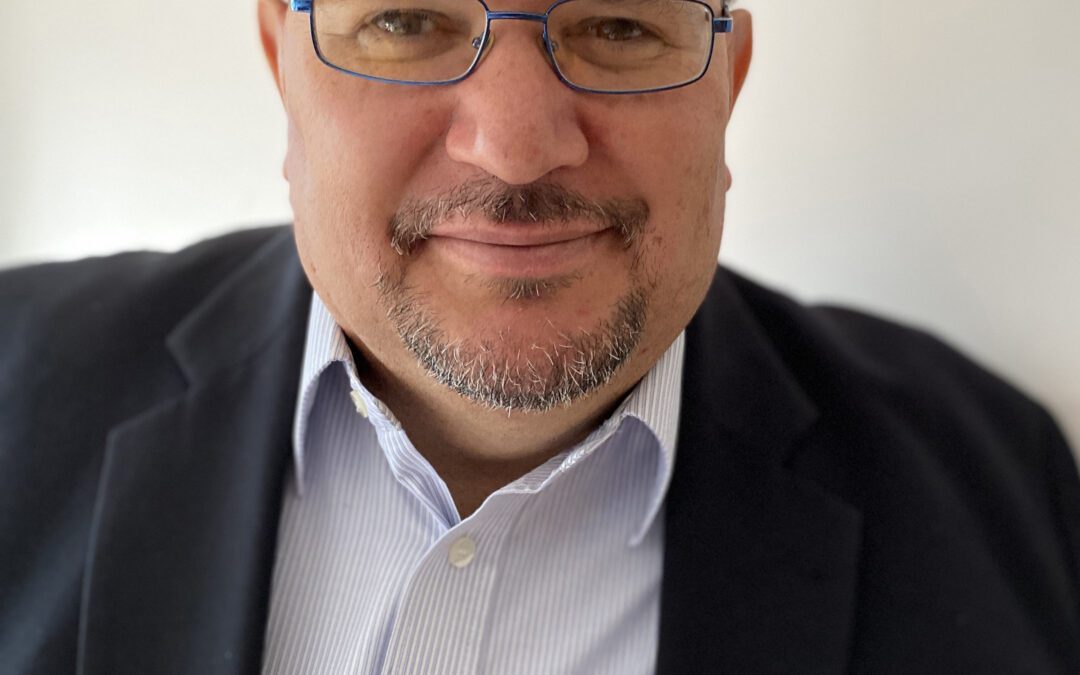
Wayne Daniell, Ph.D., joined ChemQuest in 2023 following a career path that no one could have predicted. From conducting university-based research and co-founding a nanomaterials startup to eventually undergoing a successful sale of said startup to a tier-one consumer electronics company, Wayne’s quest for “what else” continues to serve him well in his current role on ChemQuest’s global business development team.
I recently had the chance to chat with Wayne regarding his unique background, following the dots on his path to see — in retrospect — how each step now helps him support our clients today.
What were some of the highlights of your career prior to joining ChemQuest?
That’s an interesting point because I think I’m probably quite different from the majority of our colleagues at ChemQuest in that I didn’t come from “big chemistry” or the chemical industry. We have a lot of colleagues who have come from the big names in the global chemical industry, and I’ve never worked for one of those big chemical companies. I’ve worked with them, as a supplier or as a project partner, but I’ve never actually been employed by one of them.
I’m more from an entrepreneurial, small startup company background. That’s where I spent 14 years running my own nanotech company, NanoScape. This gives me a different view of a lot of the projects that we do because I’m coming at it from the perspective of the small guy from the bottom — as opposed to being one of the big guys at the top.
In terms of my background, I did my Ph.D. in the UK — very idealistically — in automotive exhaust gas catalysts, trying to do chemistry that could protect the environment. I managed to get a qualification that would hopefully lead to a career, while at the same time doing something positive for the environment and society. I really like that aspect of my education.
Then I suppose I made a brave decision to go abroad and come to Germany straight after my Ph.D., joining the university here in Munich to do applied research. That’s when I really got involved with big chemistry, working on projects with basically all of the German chemical giants, like BASF, Wacker, and Bayer, within the scope of the university.
In 2001, together with two colleagues, we launched NanoScape straight out of the university lab. I ran that company, together with my co-founders, for 14 years before finally selling it very successfully to Apple.
We started off as a chemical nanomaterials company, developing novel materials for products such as catalysts and air purifiers. We then moved into water purification and desalination, so again, the theme was still very much focused on the environment. We dabbled a bit in med-tech, and we were quite successful in geothermal heat pumps. This is where my coatings background comes from, developing and commercializing coatings for heat exchangers and geothermal heat pumps.
Of course, during this time we also had projects in electronics. These were very fast-moving projects, bringing in a lot of revenue, so we kept doing those alongside the more noble endeavors. My background in adhesives and sealants really developed in consumer electronics, working on things such as displays and mobile electronics devices.
This aspect of the business was actually so successful that in about 2012, we attracted some attention from very large electronics companies. And then one day, we got the phone call from Apple.
We’d managed to grow the company to about 25 people — still a small company, but we were successful. For an entrepreneur or anybody involved in a startup company, starting as a three-person operation and toiling away for 14 years, it doesn’t get much bigger than having a tier-one global player come along with an attractive offer.
And now, today, as I think about all of the iPhones in the world, I think to myself, “Yeah. We’re in there.” That journey from handmade and lab scale to multi-ton scale puts a smile on my face. The industrialised production processes that run now are quite incredible, and the material is now produced all over the world. That whole journey fills me with pride and is certainly the main highlight of my career so far.
Why did you decide to join ChemQuest?
Joining ChemQuest was really a no-brainer for me, but I need to back up for a minute. I spent five years at Apple after the acquisition, and then I retired for a year. Then, out of the blue, one of my close friends rang me up. He worked for an Italian company called SAES Getters, and their management team was looking to see if they could do more with chemicals and specialty materials. SAES was an Apple supplier, but they also wanted to develop their business unit independently from any business with Apple. They hired me as a business development manager.
I worked with SAES for a couple of years to get the project kick-started. I did a lot of analysis on their current capabilities and assets, and I developed a plan for organic growth. In addition, there was a bit of money available, and the management team asked me to explore inorganic growth, including looking at global opportunities. I agreed to take it on, but I advised the management team that professional assistance would best serve the project and ensure an ideal outcome. As a result, we contacted ChemQuest and engaged the team as our partners to advise us on this business development and mergers and acquisitions concept.
That project is how I got to know the ChemQuest team. I really enjoyed working on that project, and I was very, very impressed with the team, the approach, the way they worked through the project, the depth of knowledge, and also the breadth of knowledge to be able to cover so many different aspects and give us so many options. It was a great experience.
After my project came to an end, Dan reached out and asked if I would consider coming to join ChemQuest. I jumped at the opportunity.
How do your past experiences help inform the work that you do today for our clients?
Having actually been through an M&A process, selling NanoScape to Apple, I know what it’s like to be on the sell-side, to be the person who’s doing the selling. That personal experience is not something everybody goes through. And then, as I just mentioned, my work with SAES was on the buy-side. We had a good year, year-and-a-half, where we were involved in looking at acquisitions. Having experience on both sides of the M&A transaction process has been extremely helpful.
In addition, I spent basically 14 years at NanoScape doing product development. Taking ideas, going through lab scale and scale up, setting up on one side the practical aspects of the production — so going from gram lab scale to multi-ton production — and also setting up production offsite with toll manufacturers. Of course, I was also heavily involved in the business side with NanoScape and developing the business case for our products. What does this material actually do? Is that of use to anybody? How many people might be interested in it? If they’re interested, what are they willing to pay for it?
I guess, again, I developed a view of both sides. I understand the technology quite well, and I understand what it actually means to take something out of the lab, produce it, and sell it.
A lot of our work today also benefits from our having a vast network of contacts. Throughout my career, I’ve met many knowledgeable and influential people in lots of different fields — not just big chemicals, but from coatings in general to protective coatings, plus adhesives, composites, catalysts, automotive applications, and especially of course consumer electronics.
What have been some of the projects that you’ve most enjoyed working on thus far?
I’ve always been a bit of a rebel when it comes to project work. What I really like are those where we don’t know where they’ll end. Let me explain that because it might sound counterproductive.
With NanoScape, we started out making essentially catalysts for cars and petrochemicals — but we ended up making materials that go into iPhones. Nobody could have foreseen that path. There’s no way we could have plotted out the dots between those two points from the start. We had no idea where it would go.
So today, my favorite projects are when the client says, “This is what we do, this is our technology, these are our products. What else can we do?” That’s the question that really gets me excited.
I’ll give you an example. One of our clients was big in consumer care products, and they were looking to grow the business primarily within the fields that they knew. In addition, though, there was also scope to explore additional markets outside their traditional field of play. As a result, we were able to find a great application for them in batteries, of all things, a very hot topic these days considering the rise of electric vehicles.
We’re able to look at the client’s business and capabilities on a macro level, use our extensive knowledge and connections in specialty chemicals and advanced materials, and identify opportunities they would never have thought of. We can explain to them how, with their current portfolio, production, logistics, and so on, it wouldn’t be that big of a reach to go a couple of steps further and open up a whole new world.
I suppose it goes back to this concept of catalysis, this enabling technology, making things happen. I like those projects where we can contribute novel ideas and make something perhaps unexpected happen.
What are some of the trends or dynamics that you’re keeping your eye on because you know they’re going to affect our clients?
From my perspective, having started in exhaust gas catalysts and thinking about the environment, it’s all about sustainability. In the chemicals industry, we need to figure out a way to continue to support society without leading to its ultimate downfall. If you look at what the industry has done in the past, the use of fossil fuels, the amount of pollution created — whether from byproducts, gases that were released, poisoning of the water — the chemicals industry has not got a good reputation. Cleaning up that image and actively helping to clean up the world is something that I think we should be putting first and foremost.
We need to think about alternative sources of raw materials, like renewable biomaterials, while also working on downstream processes to become more efficient so that we’re not actually using that much material or energy in the first place. Are there materials that we can reuse? Is there stuff that we can recycle or replace with alternatives? We need to look at every single process we’re using, because the chemicals industry supports everything. Just walk through your house and take a look around. There isn’t a single thing there that hasn’t been impacted or provided by the chemicals industry in some form.
We have a responsibility to not just clean up the existing situation but to actively explore and develop ways to make the whole industry sustainable. We’ve been using raw materials and producing pollution as if there’s no tomorrow. Without being too cliched, the reality is if we continue like this, then one day there will be no tomorrow. I have two kids, we all have families who we want to have a safe future. While many, many trends are influencing our clients today, in my view, this topic of sustainability is the one that we should really be focused on. It’s the right thing to do, and let’s not forget, legislation is coming.
Reach out to Wayne at wdaniell@chemquest.com.
How can we help you? Let’s start talking: https://chemquest.com/lets-start-talking/
