
Automation is rapidly reshaping the construction and coatings industries. Processes that once required large crews, scaffolding, and significant safety risks are increasingly being performed by drones and robotic systems. In the paints and coatings sector, these technologies are moving beyond experimental prototypes to practical commercial tools used for building maintenance, infrastructure protection, roofing systems, and interior finishing.
Automation in the coatings industry is increasingly driven by the convergence of robotics, drones, and artificial intelligence (AI). While robotic platforms provide the mechanical capability to apply coatings, AI provides the intelligence needed for autonomous navigation, surface interpretation, and quality control. Together, these technologies are transforming coating application from a labor-intensive manual process into a data-driven, digitally controlled workflow.
Cross-Industry Origins
The rapid emergence of drones and robotic systems in coatings applications did not originate within the coatings industry itself. Instead, these technologies were developed in adjacent sectors such as defense, agriculture, energy, and construction before being adapted for painting, inspection, and surface maintenance.
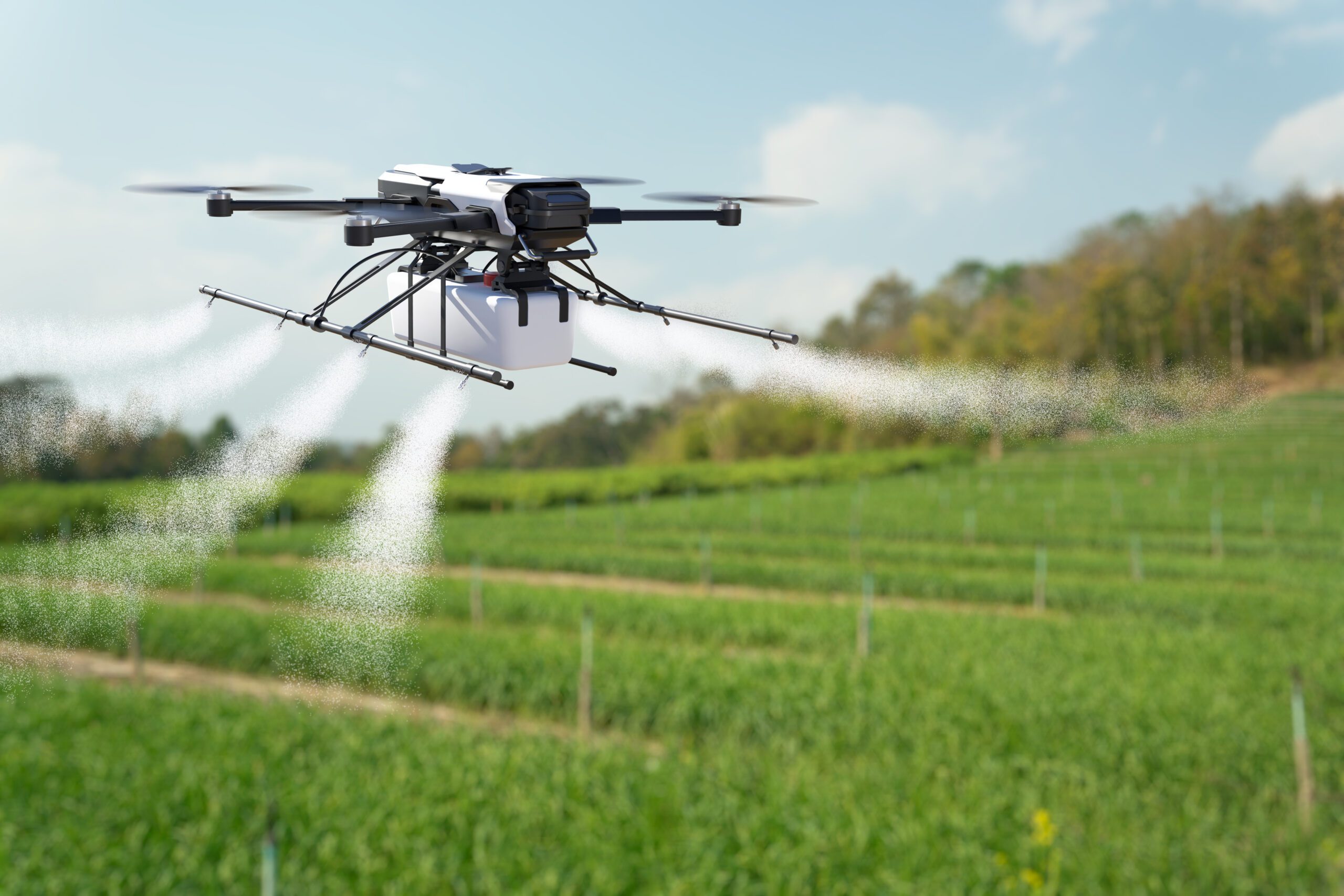
Agricultural drone
Advances in autonomous navigation, machine vision, and precision spraying from these industries now enable automated inspection, surface preparation, and coating application. Currently, only about 5% of the total robotic and drone market is concentrated in paints and coatings.
Autonomous Coating Market Drivers and Revenue
Several trends are accelerating adoption within the coatings sector. Labor shortages, safety concerns, and the need for higher productivity are key drivers. Automation is beginning to change how coatings are applied, from aerial drones spraying building façades and infrastructure to autonomous robots painting interior drywall surfaces.
The construction industry faces a growing shortage of skilled painters, with many experienced workers nearing retirement and fewer younger workers entering the trade. Robotic coating systems can help offset these shortages by automating repetitive and physically demanding tasks.
Safety is another major factor. Exterior coating work often requires painters to operate on scaffolding, lifts, or suspended platforms. Drone-based coating systems can apply coatings to building façades, water towers, and elevated infrastructure without the need for scaffolding or rope access, significantly reducing fall risks.
Automation also improves productivity and coating consistency. Robotic systems maintain precise spray angles, distances, and material flow rates, producing more uniform film thickness and reducing overspray. Automated spray systems can achieve transfer efficiencies of 85-95%, higher than typical manual application. In addition, robotic systems can operate continuously without fatigue, increasing throughput and reducing project timelines.
The painting robots market size is expected to see strong growth in the next few years, expanding to $4.9 billion in 2030 at a compound annual growth rate (CAGR) of 8.7%.1 Growth in the forecast period can be attributed to increasing electric vehicle production, growth in smart factories, rising labor cost pressures, demand for sustainable and low-waste painting processes, and advancements in AI-based robotic vision systems. Major trends in the forecast period include increasing adoption of automated surface coating, rising use of vision-guided painting robots, growth in multi-axis robotic painting systems, expansion of robots in complex geometry painting, and demand for consistent and high-quality paint finishes.
Benefits and Challenges to the Industry
As discussed, robotic coating systems offer multiple benefits, including improved safety, lower material waste, better coating quality, and higher productivity (see Figure 1).
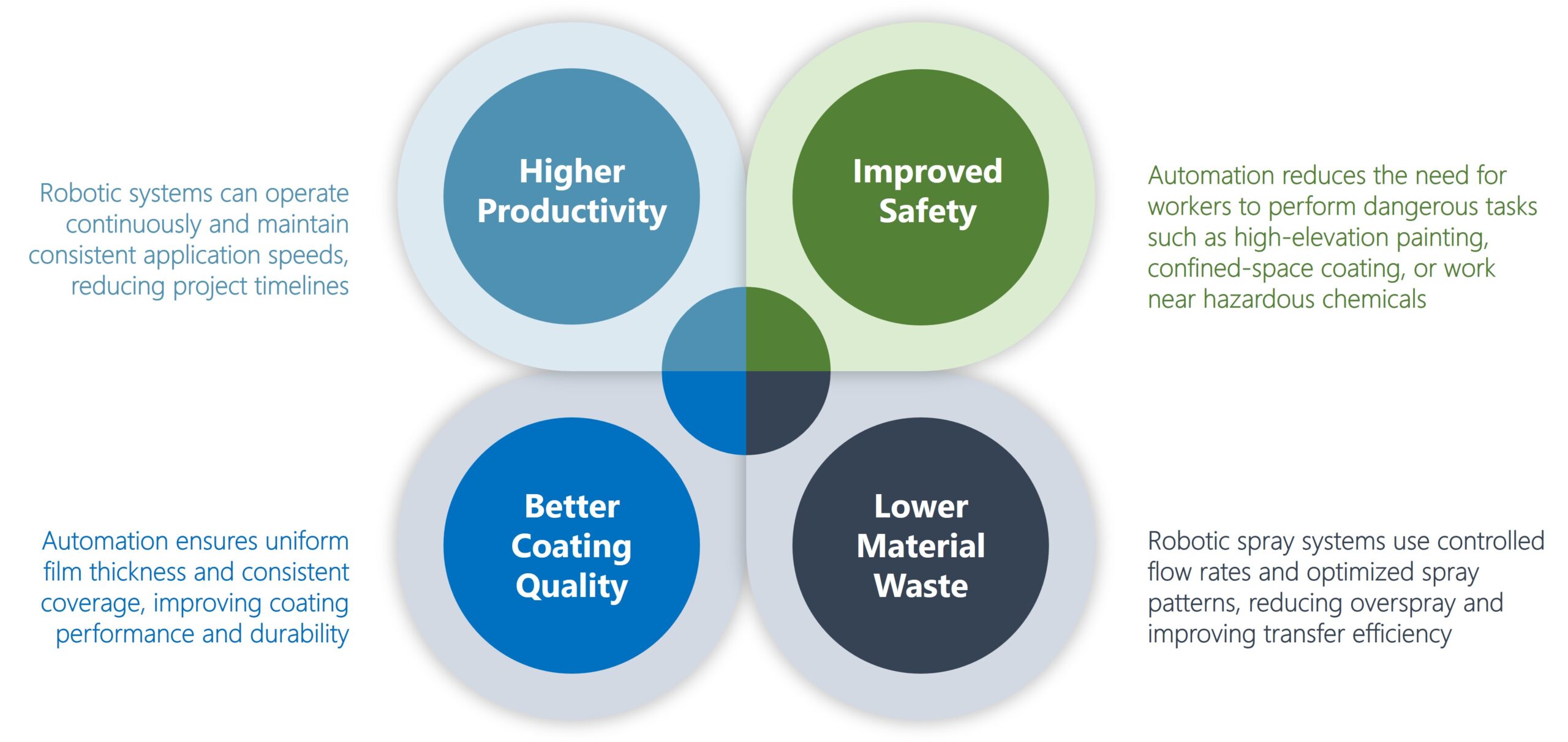
Figure 1. Benefits of robotic coating systems
(Source: The ChemQuest Group, Inc.)
Despite their promise, however, these systems still face several challenges:
- Surface complexity — Irregular surfaces, obstacles, and varying geometry can make robotic coating difficult.
- Weather and environmental conditions — Drone-based painting is sensitive to wind, temperature, and humidity.
- Equipment cost — Initial investment in robotics can be significant, although long-term labor savings may offset these costs.
- Regulatory considerations — Drone operations must comply with aviation regulations and safety standards.
Drone-Based Coating Applications
Among the most exciting developments in coating technology is the emergence of aerial robotic painters. These systems use drones equipped with spray modules to apply coatings to large surfaces.
Exterior Building Painting
One of the most promising applications is painting building façades. Companies developing painting drones have created tethered aerial systems capable of spraying coatings on vertical walls, high-rise buildings, and infrastructure structures. One example is a drone platform capable of coating more than 200 square feet per minute, significantly accelerating exterior painting operations.
The process typically involves:
- Surface mapping using onboard cameras and sensors
- Automated path planning
- Controlled spraying through a robotic nozzle system
- Real-time monitoring by a ground operator
These drones can reach elevations of over 150 feet while remaining tethered for continuous power and material supply. In some cases, robotic painting systems can coat building surfaces about 25% faster than traditional manual methods while reducing material waste and improving consistency.
Roofing and Waterproofing Applications
Roof coatings represent another major opportunity for drone-based application. Commercial roofs, particularly large, flat roofs on warehouses, stadiums, and industrial facilities, often require periodic coating or waterproofing. Traditionally, this work requires extensive labor and can be difficult to perform safely in hot or hazardous environments.
Drone-based systems are increasingly being tested for:
- Elastomeric roof coatings
- Silicone waterproofing systems
- Protective roof membranes
- Reflective energy-saving coatings
Because drones can rapidly cover large horizontal surfaces, they can significantly accelerate large-scale roofing projects. In some pilot projects, aerial coating systems have been used to apply waterproofing coatings to stadium structures and infrastructure surfaces. For coatings manufacturers, drone application also opens opportunities for developing formulations optimized for aerial spray systems, including materials with improved atomization characteristics and minimal drift.
Infrastructure and Industrial Coatings
Drone painting systems are particularly attractive for infrastructure maintenance, where access is difficult or hazardous. Potential applications include:
- Bridge coating and repainting
- Wind turbine tower protection
- Oil and gas storage tank coating
- Ship hull maintenance
- Steel structure corrosion protection
These surfaces often require frequent inspection and maintenance. Drones can first perform inspection using cameras and sensors, then return to apply coatings only where needed. This integration of inspection and coating represents a powerful new maintenance model known as inspect-then-coat robotics.
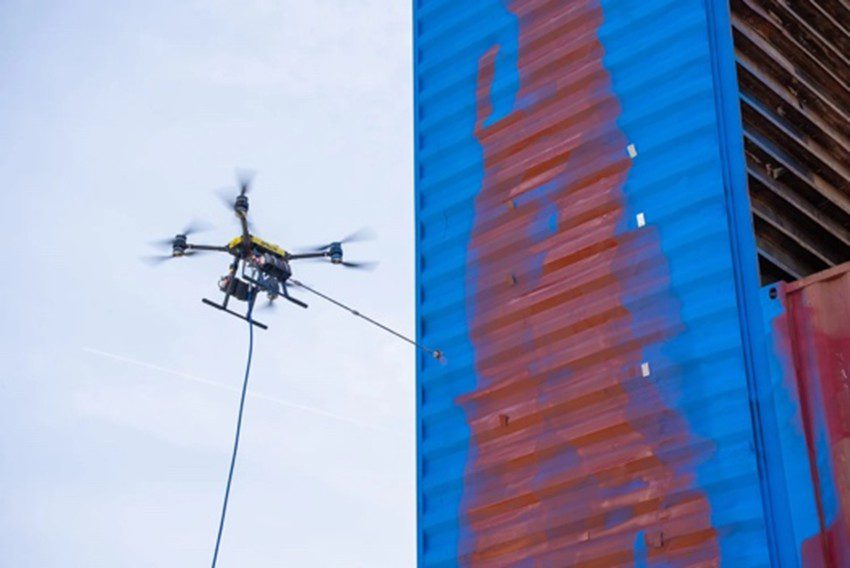
Leading Drone Companies Developing Coating, Cleaning, and Inspection Technologies
- Apellix LLC develops drone spraying platforms designed for infrastructure and façade coatings. Apellix won the AkzoNobel Paint the Future challenge, among others.
- Aerones LLC provides tethered drones for wind turbine cleaning and protective coating operations.
- Lucid Bots LLC produces autonomous exterior cleaning and coating drones.
- Skygauge Robotics develops tethered remote inspection drones capable of coating and ultrasonic testing for large infrastructure.
- Voliro AG produces omnidirectional drones capable of stable spraying on curved infrastructure.
(Spray painting drone image courtesy of Apellix LLC)
Robots for Interior Painting
Automation is also transforming interior finishing work. Highly labor intensive, interior painting in large construction projects represents a significant portion of finishing costs. Several companies and research groups are developing robotic painting systems capable of autonomously painting interior walls and ceilings.
Autonomous Wall-Painting Robots
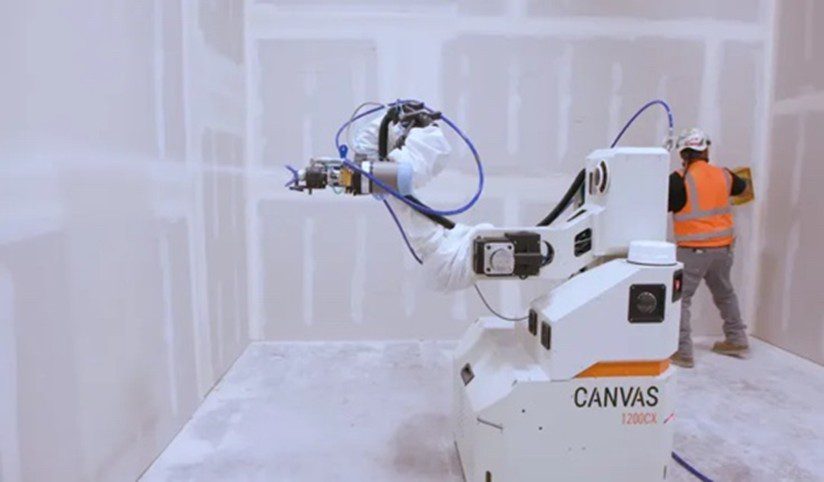
Interior painting robots typically consist of a mobile base equipped with a robotic arm and spray or roller application system. These robots navigate rooms, scan wall surfaces, and apply coatings with controlled patterns.
Some robotic systems can automatically map rooms and determine optimal painting paths. Several emerging systems are designed specifically to meet the growing demand for housing and urban construction by reducing labor requirements and project timelines.
These robots offer several advantages:
- Consistent coating thickness
- Reduced material waste
- Faster completion of large interior spaces
- Reduced worker exposure to paint fumes
Many interior painting robots use computer vision and laser scanning to detect edges, windows, and doorways, allowing them to avoid obstacles and maintain clean paint lines.
Roller-Based Painting Robots
Some research prototypes use roller-based mechanisms rather than spray systems. In these systems, robots move along walls using rails or mobile platforms while applying paint with rollers. The goal is to mimic the technique used by human painters while maintaining precise pressure and movement control. These designs aim to automate repetitive interior painting tasks while reducing exposure to hazardous chemicals and improving productivity.
Leading Robotic Painting Companies
- Canvas LLC produces robots that automate drywall finishing and surface preparation.
- PaintJet LLC offers robotic spray systems designed for large commercial buildings and warehouses. PaintJet also has its own paint designed for use with its spraying equipment.
- Okibo Inc. produces autonomous construction robots capable of drywall finishing and painting operations.
(Drywall finishing robot photo courtesy of Canvas LLC)
A Roadmap to the Future
The integration of robotics and drones into the coatings industry is still in its early stages, but adoption is accelerating rapidly (see Figure 2). Future developments may include:
- Fully autonomous façade coating drones
- Robotic roof coating systems
- AI-driven inspection and maintenance platforms
- Swarm robotics for large infrastructure projects
- Integration with digital building models (BIM)
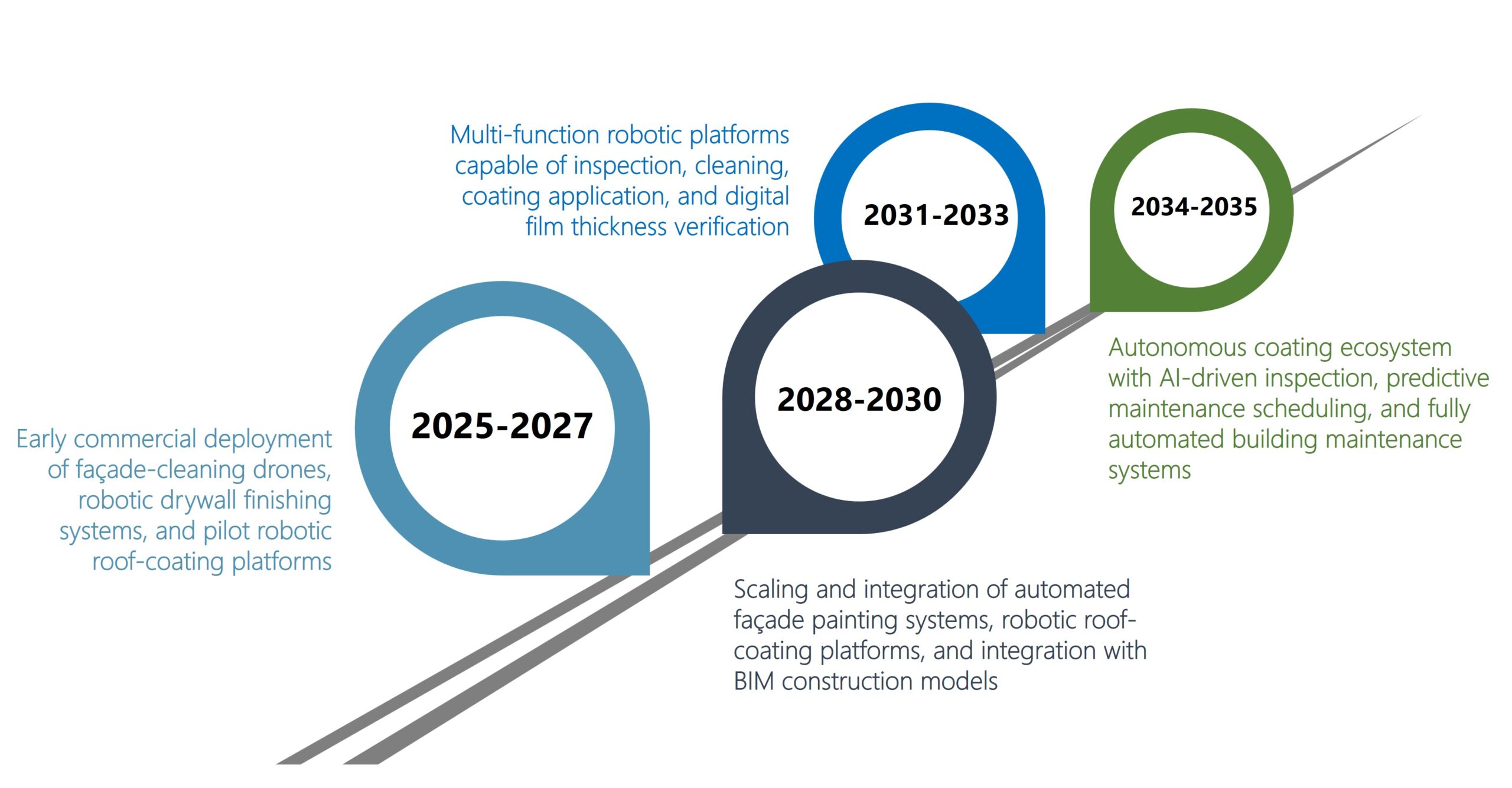
Figure 2. Roadmap of key future developments for robotic coatings
(Source: The ChemQuest Group, Inc.)
In addition, coatings themselves may evolve to support robotic applications. New formulations are being designed specifically for automated spraying systems, with improved atomization and flow characteristics optimized for drones or robotic arms.
Exciting Opportunities
Drones and robotic systems are poised to become an increasingly important part of the paint and coatings industry. From aerial robots coating building façades and roofs to autonomous machines painting interior walls, these technologies promise to improve safety, productivity, and coating quality.
As labor shortages continue to challenge the construction industry and automation technologies advance, robotic coating systems will likely become more common on job sites around the world. For coatings manufacturers, contractors, and technology developers, the convergence of robotics and coatings represents one of the most exciting opportunities in the future of surface finishing.
To learn more, reach out to the author at vscarborough@chemquest.com.
Read in PCI.
Reference
- Painting Robots Global Market Report 2026, The Business Research Company, http://www.thebusinessresearchcompany.com.