
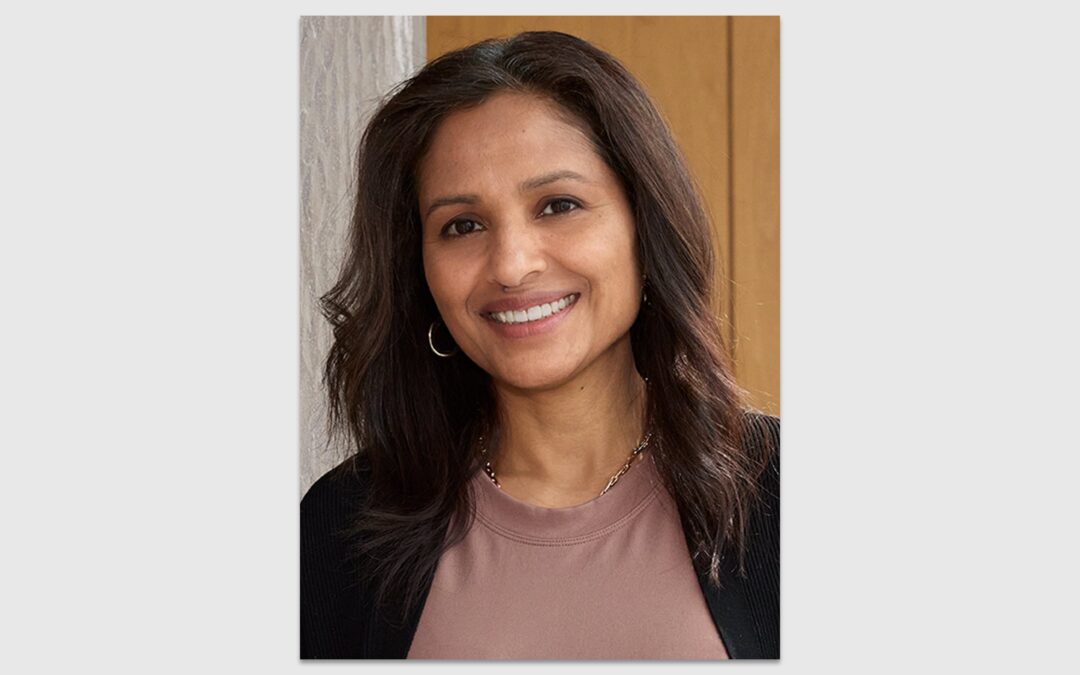
Sabina Chatterjee joined the ChemQuest leadership team as executive vice president in August 2026. In close collaboration with Daniel Murad, ChemQuest chairman, and Robert Lovegrove, CEO, she works to drive growth in our Business Strategy & Transformation and M&A Advisory pillars.
What were some of your career highlights prior to joining ChemQuest?
I was trained as a chemical engineer and started at Colgate-Palmolive’s Morristown plant. I worked with R&D to scale lab ideas to commercial production, which gave me a real appreciation for the challenges of formulation work. I then moved into procurement, which provided a view of the entire supply chain, from sourcing raw materials and packaging to getting product out the door.
I went to business school planning to focus on operations, and even did a dual degree with the engineering graduate school. But somehow my path led to equity research, where I covered several industrial sectors and ultimately chemicals.
Finance gave me the commercial perspective I was missing. A scientist could have the best formulation, and the engineering could be flawless, but if there isn’t a market for the product, or the economics aren’t favorable, it’s a commercial failure. I quickly developed an appreciation for the full ecosystem, including sales and marketing, management, investors, and overall ROI.
While equity research let me dig deep into each company’s financials, investment banking sharpened the strategy side. I advised executive teams at bellwether companies on M&A, capital allocation, and investor positioning. When the ESG trend took hold during the pandemic, I shifted to help build out the Sustainable Finance & Advisory practice. My team helped companies gather and communicate their sustainability initiatives and reach those goals through a range of debt instruments. As expected, my clients were concentrated in industrials, given the size of their carbon footprint.
Why did you decide to join ChemQuest?
I met Dan Murad nearly 20 years ago, back in my equity research days. Our team relied on Dan as our subject matter expert in the CASE (coatings, adhesives, sealants, and elastomers) sector. His annual call gave our institutional clients market insight that shaped their investment thesis for public coatings companies and their value chain partners.
When I moved to investment banking, our paths crossed again from another angle. Milliken had landed on my banking coverage list, and I built a relationship with Robb Lovegrove, who led corporate strategy there at the time. I was impressed by his background and deal record, so when I heard he was joining ChemQuest as CEO, I paid attention. The combination of Dan’s knowledge base and Robb’s leadership was a strong sign that the firm was set up for something big. With each interaction, I learned more about Robb’s vision for ChemQuest and became increasingly intrigued. When he mentioned he was looking for a partner to build out the M&A advisory practice with Dan, I thought it represented a perfect intersection of everything I’d done.
How have your past experiences informed your work with our clients?
ChemQuest has a technical powerhouse that understands formulations, competing chemistries, manufacturing, and market dynamics in specialty chemicals. What I add is the finance and transaction side.
My research background lets me see how investors value these businesses and what they reward. My banking experience helps clients think through M&A options, capital allocation, and how a deal will be received. My sustainable finance work helps clients judge whether low-carbon investments will pay back. And my engineering and procurement roots let me connect the commercial story to what’s happening on the plant floor and in the supply chain, which keeps the advice practical.
What are some M&A and chemical industry trends you're seeing that affect our clients?
The market is active but selective. Buyers are focused on specialty businesses with defensible margins and are far more cautious on commodity assets, so quality earns a premium and everything else is harder to sell.
We’re also seeing large companies reshape their portfolios, which is generating carve-outs. Those deals bring separation complexity, such as standalone costs and transition services. Sellers need help preparing a business to stand on its own, and buyers need help underwriting standalone costs and separation risk.
Regionally, Europe is going through a structural reset. Energy costs, Chinese overcapacity, and weak demand have driven closures and restructurings, which is pushing deal activity and strategic attention toward North America.
External factors are weighing more heavily on deals today. Trade policy, tariffs, and regulation need to be built into diligence and valuation. And given the constantly evolving backdrop, testing assumptions across multiple scenarios helps a client understand the range of risk they face.
Finally, sustainability has shifted from branding to economics. Today’s landscape looks very different from three years ago, as government incentives and policies have shifted, and some recycling-focused businesses are under real financial stress. Low-carbon and circularity investments always needed some form of payback, but now the return expectation is higher. That leaves our clients needing partners who can stress-test both the technology and the business case, which is where ChemQuest’s technical depth and my transaction experience work together.
How can we help you? Let’s start talking: https://chemquest.com/lets-start-talking/
